

Printify vs MerchOne for Custom Apparel in 2026
Quick Summary
Printify is an open marketplace of print providers with a very wide catalog, suited to testing many products, while MerchOne uses a curated production network with more uniform quality, suited to steady repeat production. For custom apparel, the right choice depends on whether you prioritize breadth and testing or consistency and repeat orders.
- Printify routes orders through an open marketplace of providers, so quality varies by provider.
- MerchOne uses a curated production network, which gives more uniform quality across orders.
- Compare platforms using one garment, one print placement, the same quantity and the same shipping destination.
- Order at least two units and wash one before committing a best-selling design to a provider.
- Document sample results with photos and dates so you can re-evaluate when providers change.
Table of Contents
- How Printify and MerchOne Compare at a Glance
- Pricing: Base Costs, Fees and Real Margins
- Print Quality and Garment Selection
- Production Times, Shipping and Delivery Regions
- Which Platform Works Best for Beginners
- Returns, Misprints and Customer Service Workflows
- Choosing the Right Platform for Your Custom Apparel Shop
- Frequently Asked Questions
How Printify and MerchOne Compare at a Glance
Last Updated: November 14, 2026
Choosing a print-on-demand partner shapes everything from garment quality to delivery speed, and the printify vs merchone for custom apparel decision is one many new sellers face early. If you are also weighing Printify against another provider, see Printify vs Gooten for Custom Decor: Which Fits Your Store. Printify and MerchOne both connect shops to third-party print providers, but they differ in how they route orders, what they charge, and how much control you keep over production.
Here is a quick comparison of the core differences:
| Factor | Printify | MerchOne |
|---|---|---|
| Provider model | Open marketplace of providers | Curated production network |
| Catalog breadth | Very wide | More focused |
| Quality consistency | Varies by provider | More uniform |
| Best for | Testing many products | Steady, repeat production |
Pricing: Base Costs, Fees and Real Margins
Base product cost is only one line in the margin equation. For custom apparel, the number that matters is the fully loaded cost per shirt delivered to your customer: blank cost plus print cost plus shipping plus any platform or subscription fee, subtracted from your retail price. Printify and MerchOne structure those lines differently, so a headline base price can mislead if you do not normalize the comparison.
To compare like for like, build a cost sheet around one specific garment and one specific print placement, then hold everything else constant:
- Garment and print: same blank style, same fabric weight, same print size and location (for example, a full-front DTG print on a heavyweight cotton tee).
- Order quantity: the same unit count on both platforms, since some providers tier pricing by volume.
- Shipping destination and service level: the same ZIP code or region and the same carrier speed, because ground versus expedited changes the delivered cost materially.
- Fees: include any platform subscription, payment processing, and marketplace referral fees that apply to your sales channel.
- Retail price: the price you actually charge, not a theoretical markup.
A worked example makes the mechanism concrete. Suppose your retail price is $28.00. If the blank plus print costs $13.50, shipping to the customer is $4.75, and platform and payment fees take another $1.40, your contribution margin is $8.35 per order before ad spend. Change any one input, a heavier blank, a larger print, expedited shipping, and the margin moves. The point is not a specific dollar figure but the discipline of modeling all five lines for the same garment on both platforms.
Watch out: comparing a Printify base cost from one provider against a MerchOne price for a different blank or print method produces a false winner; normalize the garment, placement, quantity, and destination before you draw a conclusion.
Pricing and subscription terms change, so verify current figures on each platform before you set store prices, and re-run your cost sheet whenever a provider updates its rates.
Print Quality and Garment Selection
Print quality on apparel is not a single attribute. It is the sum of the blank's fabric and construction, the decoration method, the provider's equipment and operator skill, and how the finished print survives washing. Printify and MerchOne differ most in how much of that chain you control versus how much is standardized for you.
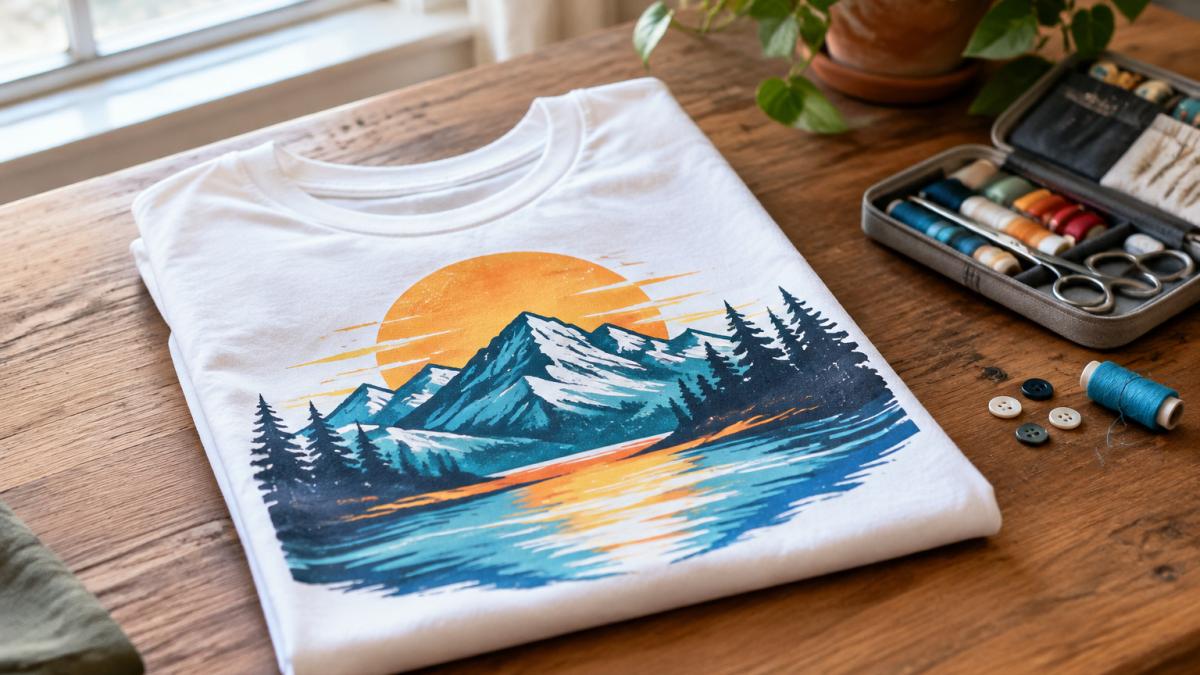
Rather than rely on platform marketing, test with a repeatable method. Order the same design on the same garment from each platform you are considering, then evaluate against fixed criteria:
- Fabric feel and weight: note the actual fabric composition and weight (for example, a 100% cotton jersey versus a cotton-poly blend) and how the print changes the hand feel of the shirt.
- Sizing and fit: measure the sample against the published size chart and check shrinkage after the first wash, since fit drift drives returns.
- Color accuracy: compare the printed color to your design file under daylight and indoor light; note any shift in gradients, skin tones, or fine detail.
- Print consistency: if you order more than one unit, compare placement, scale, and registration across the run.
- Wash durability: wash the sample several times following the care label and inspect for cracking, fading, or edge lift.
A common pattern is that decoration method matters as much as provider. Direct-to-garment printing behaves differently on 100% cotton than on blends, and the same design can look softer on one fabric and sharper on another. Choose the blank to suit the design and the customer's expected use, not just the lowest base cost.
Provider-level quality control deserves its own checklist. Before you route live orders to a provider, confirm stock availability on your chosen blanks, ask how the provider handles reprints for defects, and check whether the provider's location aligns with your main customer regions for transit time. A provider that is excellent on one blank may be weak on another, so qualify each provider per product rather than per platform.
Watch out: a single sample that looks good does not prove consistency; order at least two units and wash one before you commit a best-selling design to a provider.
Document your test results with photos and dates so you can re-evaluate when a provider changes equipment or you add a new blank to your lineup.
Production Times, Shipping and Delivery Regions
Production time and shipping time are separate. Production is how long the provider takes to print and pack. Shipping is the carrier's time to reach the customer. Customers feel both, so track each one.
Check delivery regions before you promise fast shipping. Confirm which countries each platform serves, and set realistic delivery windows in your store listings. Under-promising and over-delivering protects your reviews.
Which Platform Works Best for Beginners
If you are starting out, your first priority is a simple setup and a low-risk way to test designs. Once you have picked a platform, follow a practical walkthrough from design to finished custom garment.
Whichever platform you pick, order a sample of your best-selling design first. Inspect the print, the stitching, and the fit before you list the product. A sample costs far less than a batch of unhappy customers.
Returns, Misprints and Customer Service Workflows
Misprints can happen with any print-on-demand partner, so review the policies of any platform you consider for defective orders, damaged shipments and returns before you launch.
Document everything. Save photos of defective items, order numbers, and customer messages. A clear record speeds up resolution with both the platform and your customer.
Set your own return policy too. Customers expect a clear path when something goes wrong, so state your timeline and what you will cover. A friendly, fast response to a misprint often turns an unhappy buyer into a repeat customer.
Choosing the Right Platform for Your Custom Apparel Shop
Run the same test before you decide. Order samples from both, compare the print quality after a few washes, time the delivery to your main customer region, and calculate your real margin on your best product. The numbers will show you which platform fits your shop.
Whatever you choose, pair the platform with thoughtful designs and clear product information. Browse our custom tees, including the America 250 Patriotic T-Shirt with Bald Eagle & Statue of Liberty at $20.99, to see how a well-chosen blank and a strong design work together.
Frequently Asked Questions
Is there a better option than Printify for custom apparel?
It depends on what you value most. Printify offers a very large catalog of blank garments from many print providers, which makes it flexible for shops testing many styles. MerchOne is worth comparing if you want a smaller, more curated set of products and a simpler setup. Order a sample of the garment you plan to sell from each platform, then judge fabric weight, print sharpness and fit before committing your store to either one.
What is the downside of Printify for custom apparel?
The main downside is variation. Because Printify routes orders to many independent print providers, print quality, color accuracy and shipping speed can differ depending on which provider fills your order. Shops often need to check provider ratings and order test samples to find reliable partners. Base costs can also climb once you add premium garments, so compare the per-item cost with your target retail price before you set prices.
Which is easier for beginners, Printify or MerchOne?
Beginners usually find a smaller catalog easier to manage. A focused product range means fewer decisions about blanks, providers and print methods. Both platforms connect to common online stores, but Printify's larger catalog can overwhelm first-time sellers. Start with two or three garments, place a sample order, and expand only after you are satisfied with the print quality and packing.
Can you use Printify or MerchOne with an online store?
Both platforms are designed to connect with ecommerce storefronts so orders flow automatically to the production partner. Check the current list of supported sales channels on each platform before you start, since integrations change over time. Once connected, you set your retail prices in your store and the platform bills you the base production cost plus shipping for each order placed.

- Choosing a selection results in a full page refresh.
